How Podiatrists Diagnose and Treat Clubfoot in Babies

Clubfoot is a birth condition that causes one foot or both feet to turn downward and inward. In some cases, the sole faces backward. The affected foot can also appear smaller than the other foot, and the calf can be thinner. Clubfoot does not usually cause pain in a newborn. Without proper treatment, however, the changed foot position can make standing and walking painful as the child grows. The exact cause is not always known. Family history can raise a baby’s risk, and clubfoot is rarely connected to another health condition.

A podiatrist can examine the baby’s feet, ankles, and legs to confirm the diagnosis. Clubfoot is sometimes seen on an ultrasound before birth, but treatment begins after delivery. Care usually starts within the first two weeks of life. One leading approach is the Ponseti method. A trained specialist gently moves the foot toward a better position and applies a cast to hold it there. This process is repeated for several weeks. The podiatrist can track the foot’s position, check the skin, and explain each stage to the parents.

After casting, many babies require a small procedure to loosen the tight Achilles tendon at the back of the ankle. Special boots connected by a bar then help keep the feet properly aligned. The boots are first used for most of the day. Later, the child generally uses them while sleeping for several years. A podiatrist can monitor growth, adjust the treatment plan, and address signs of relapse. Surgery is reserved for cases that do not respond fully to casting or return despite careful treatment. Most children who receive early care develop stable, pain-free feet. They usually begin walking at the expected age, and can take part in sports and other activities. If your newborn has symptoms of clubfoot, it is suggested that you include a podiatrist on your healthcare team to ensure your child’s full recovery. 

Congenital foot problems require immediate attention to avoid future complications. If you have any concerns, contact one of our podiatrists of Pennsylvania Foot & Ankle. Our doctors can provide the care you need to keep you pain-free and on your feet.

Congenital foot problems are deformities affecting the feet, toes, and/or ankles that children are born with. Some of these conditions have a genetic cause while others just happen. Some specific foot ailments that children may be born with include clubfeet, polydactyly/macrodactyly, and cleft foot. There are several other foot anomalies that can occur congenitally. What all of these conditions have in common is that a child may experience difficulty walking or performing everyday activities, as well as trouble finding footwear that fits their foot deformity. Some of these conditions are more serious than others. Consulting with a podiatrist as early as possible will help in properly diagnosing a child’s foot condition while getting the necessary treatment underway.

What are Causes of Congenital Foot Problem?

A congenital foot problem is one that happens to a child at birth. These conditions can be caused by a genetic predisposition, developmental or positional abnormalities during gestation, or with no known cause.

What are Symptoms of Congenital Foot Problems?

Symptoms vary by the congenital condition. Symptoms may consist of the following:

  • Clubfoot, where tendons are shortened, bones are shaped differently, and the Achilles tendon is tight, causing the foot to point in and down. It is also possible for the soles of the feet to face each other.
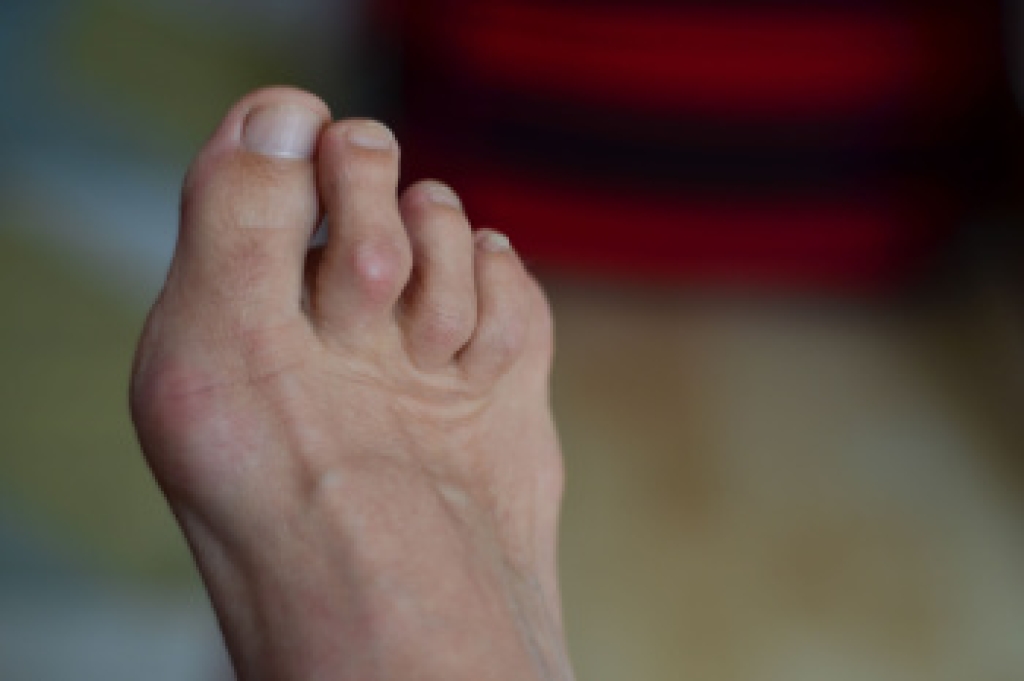
  • Polydactyly, which usually consists of a nubbin or small lump of tissue without a bone, a toe that is partially formed but has no joints, or an extra toe.
  • Vertical talus, where the talus bone forms in the wrong position causing other bones in the foot to line up improperly, the front of the foot to point up, and the bottom of the foot to stiffen, with no arch, and to curve out.
  • Tarsal coalition, when there is an abnormal connection of two or more bones in the foot leading to severe, rigid flatfoot.
  • Cleft foot, where there are missing toes, a V-shaped cleft, and other anatomical differences.
  • Macrodactyly, when the toes are abnormally large due to overgrowth of the underlying bone or soft tissue.

Treatment and Prevention

While there is nothing one can do to prevent congenital foot problems, raising awareness and receiving neonatal screenings are important. Early detection by taking your child to a podiatrist leads to the best outcome possible.

If you have any questions, please feel free to contact one of our offices located in Bensalem, Philadelphia, Northeast Philadelphia, Yardley, PA, and Hamilton, NJ . We offer the newest diagnostic and treatment technologies for all your foot care needs.

Read more about Congenital Foot Problems

How a Podiatrist Can Help Manage Arthritis in the Feet

Arthritis can affect the feet by causing pain, stiffness, and reduced mobility in the joints. Because each foot contains many joints that support standing and walking, arthritis can make everyday movement more difficult. The condition may affect the toes, the middle of the foot, or the ankle, depending on the type of arthritis involved. Common symptoms include aching, swelling, and tenderness. Some people also notice joint stiffness, especially after periods of rest. As arthritis progresses, it may become harder to walk comfortably or participate in normal daily activities. Since several forms of arthritis can affect the feet, a professional evaluation is important to determine the underlying cause and recommend the most appropriate treatment.


Arthritis may gradually change the structure and function of the foot over time. Inflammation within the joints can reduce flexibility and make movement uncomfortable. As the joints become less stable, changes in the way a person walks may place added stress on other areas of the foot. This may also affect the ankles, knees, and hips. A thorough examination helps identify which joints are involved and how arthritis is affecting foot function. Understanding the source of symptoms allows a podiatrist to develop a treatment plan that supports better mobility and long-term foot health.


A podiatrist plays an important role in managing arthritic foot pain by evaluating joint function and identifying changes that may be contributing to discomfort. Treatment is tailored to each patient's condition and may focus on improving mobility, reducing joint stress, and preserving foot function. Early podiatry care can also help address changes before they become more severe or interfere with daily activities. Regular monitoring allows treatment to be adjusted as symptoms change over time. If arthritis pain or stiffness is affecting your feet or limiting your mobility, it is suggested that you consult a podiatrist for an evaluation and appropriate treatment options.

Arthritis can be a difficult condition to live with. If you are seeking treatment, contact one of our podiatrists from Pennsylvania Foot & Ankle. Our doctors can provide the care you need to keep you pain-free and on your feet.

Arthritic Foot Care  

Arthritis is a joint disorder that involves the inflammation of different joints in your body, such as those in your feet. Arthritis is often caused by a degenerative joint disease and causes mild to severe pain in all affected areas. In addition to this, swelling and stiffness in the affected joints can also be a common symptom of arthritis.

In many cases, wearing ill-fitting shoes can worsen the effects and pain of arthritis. Wearing shoes that have a lower heel and extra room can help your feet feel more comfortable. In cases of rheumatoid arthritis, the arch in your foot may become problematic. Buying shoes with proper arch support that contour to your feet can help immensely.

Alleviating Arthritic Pain

  • Exercises that stretch the foot can prevent further pain and injury and increase mobility
  • Most of the pain can be alleviated with anti-inflammatory drugs, heat, and topical medications
  • Massages can help temporarily alleviate pain.

It is best to see your doctor for the treatment that is right for your needs and symptoms. Conditions vary, and a podiatrist can help you determine the right method of care for your feet.

If you have any questions please feel free to contact one of our offices located in Bensalem, Philadelphia, Northeast Philadelphia, Yardley, PA, and Hamilton, NJ . We offer the newest diagnostic tools and technology to treat your foot and ankle needs.

Read more about Arthritic Foot Care

Plantar Warts Can Be Treated!

Plantar warts are small growths that develop on parts of the feet that bear weight. They're typically found on the bottom of the foot. Don't live with plantar warts, and call us today!

Connect With Us