What is Gout?

Gout, a form of arthritis, is a common, painful disorder caused by a buildup of uric acid crystals in the joints. It can occur in any joint in the body, including joints in the foot. Symptoms include pain, inflammation, and redness at the affected area. Gout generally occurs as attacks that come and go. Men often suffer from gout more than women, and attacks are more likely to come during the night. Anti-inflammatory medications or corticosteroids can help reduce pain and inflammation, and changes in diet have been found to help lessen the risk of attacks. Alcoholic beverages and foods that are rich in purines should be avoided. If you are experiencing gout symptoms in the foot, it is recommended to see a podiatrist for treatment.
 

Gout is a foot condition that requires certain treatment and care. If you are seeking treatment, contact one of our podiatrists from Pennsylvania Foot & Ankle. Our doctors will treat your foot and ankle needs.

What Is Gout?

Gout is a type of arthritis caused by a buildup of uric acid in the bloodstream. It often develops in the foot, especially the big toe area, although it can manifest in other parts of the body as well. Gout can make walking and standing very painful and is especially common in diabetics and the obese.

People typically get gout because of a poor diet. Genetic predisposition is also a factor. The children of parents who have had gout frequently have a chance of developing it themselves.

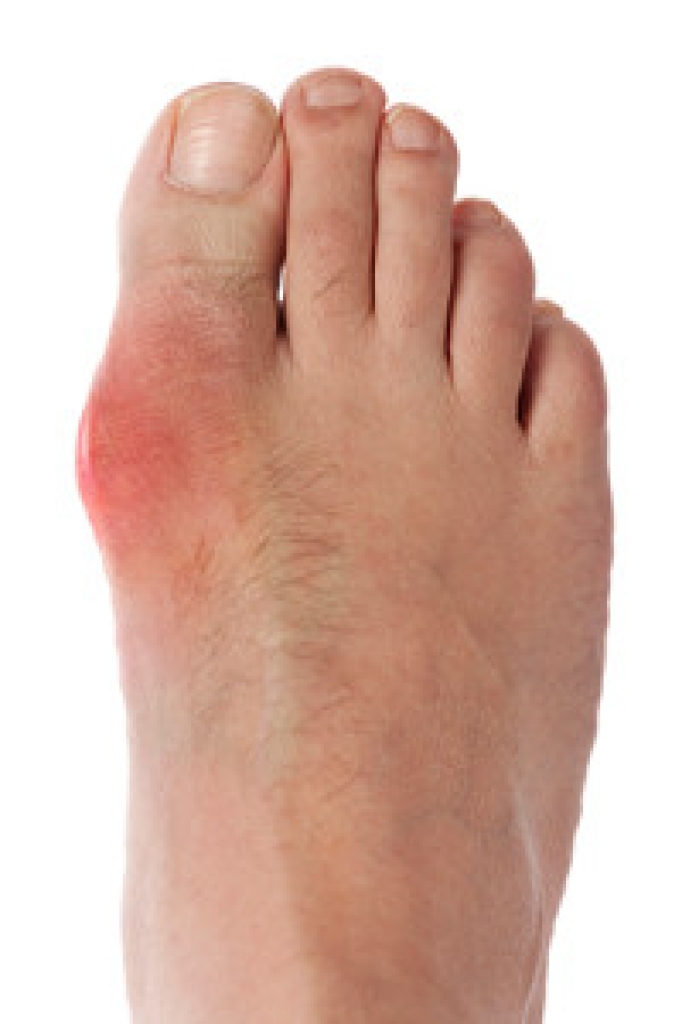
Gout can easily be identified by redness and inflammation of the big toe and the surrounding areas of the foot. Other symptoms include extreme fatigue, joint pain, and running high fevers. Sometimes corticosteroid drugs can be prescribed to treat gout, but the best way to combat this disease is to get more exercise and eat a better diet.

If you have any questions, please feel free to contact one of our offices located in Bensalem, Philadelphia, Northeast Philadelphia, Yardley, PA, and Hamilton, NJ . We offer the newest diagnostic and treatment technologies for all your foot care needs.

Read more about Everything You Need to Know About Gout

Taking Care of Your Feet

Our feet allow us to do so much, yet they are often neglected or overlooked. Therefore it is important for us to take good care of them. Wearing proper footwear is just one of the ways we can take care of our feet. Look for shoes that are comfortable and provide enough room inside. Shoes that are tight or that force the foot into an uncomfortable position, such as heels, can cause a number of health problems such as plantar fasciitis and corns. If you experience sweaty feet, use foot powder and switch socks often to prevent conditions like athlete’s foot or toenail fungus. Washing your feet will keep them clean and also help stave off certain foot ailments. If your feet hurt, giving yourself a massage by rubbing them in circular motions with your hands can help relieve some tension. If pain is constant or chronic, however, see a podiatrist for help. Finally, if you paint your nails, avoid using nail polish and polish remover containing harsh chemicals.

Everyday foot care is very important to prevent infection and other foot ailments. If you need your feet checked, contact one of our podiatrists from Pennsylvania Foot & Ankle. Our doctors can provide the care you need to keep you pain-free and on your feet.

Everyday Foot Care

Often, people take care of their bodies, face and hair more so than they do for their feet. But the feet are a very important aspect of our bodies, and one that we should pay more attention to. Without our feet, we would not be able to perform most daily tasks.

It is best to check your feet regularly to make sure there are no new bruises or cuts that you may not have noticed before. For dry feet, moisturizer can easily be a remedy and can be applied as often as necessary to the affected areas. Wearing shoes that fit well can also help you maintain good foot health, as well as making it easier to walk and do daily activities without the stress or pain of ill-fitting shoes, high heels, or even flip flops. Wearing clean socks with closed shoes is important to ensure that sweat and bacteria do not accumulate within the shoe. Clean socks help to prevent Athlete’s foot, fungi problems, bad odors, and can absorb sweat.

If you have any questions, please feel free to contact one of our offices located in Bensalem, Philadelphia, Northeast Philadelphia, Yardley, PA, and Hamilton, NJ . We offer the newest diagnostic and treatment technologies for all your foot care needs.

Read more about Every Day Foot Care

Wounds That Don't Heal Need to Be Checked

Your feet are covered most of the day. If you're diabetic, periodic screening is important for good health. Numbness is often a sign of diabetic foot and can mask a sore or wound.

Cleveland Browns Myles Garrett Inactive From Ankle Sprain

Cleveland Browns rookie defensive end Myles Garrett has been declared inactive again after spraining his right ankle. Garrett was the number one overall draft pick of 2017. However, his debut has been continually pushed back due to a number of injuries. The injury was a high-ankle sprain, which will most likely take him out for four-to-six weeks. The team has been patient with Garrett and checks his ability to play every week. Garrett has missed four straight games so far and has only recently returned to practice.
 

Sports related foot and ankle injuries require proper treatment before players can go back to their regular routines. For more information, contact one of our podiatrists of Pennsylvania Foot & Ankle. Our doctors can provide the care you need to keep you pain-free and on your feet.

Sports Related Foot and Ankle Injuries

Foot and ankle injuries are a common occurrence when it comes to athletes of any sport. While many athletes dismiss the initial aches and pains, the truth is that ignoring potential foot and ankle injuries can lead to serious problems. As athletes continue to place pressure and strain the area further, a mild injury can turn into something as serious as a rupture and may lead to a permanent disability. There are many factors that contribute to sports related foot and ankle injuries, which include failure to warm up properly, not providing support or wearing bad footwear. Common injuries and conditions athletes face, including:

  • Plantar Fasciitis
  • Achilles Tendinitis
  • Achilles Tendon Rupture
  • Ankle Sprains

Sports related injuries are commonly treated using the RICE method. This includes rest, applying ice to the injured area, compression and elevating the ankle. More serious sprains and injuries may require surgery, which could include arthroscopic and reconstructive surgery. Rehabilitation and therapy may also be required in order to get any recovering athlete to become fully functional again. Any unusual aches and pains an athlete sustains must be evaluated by a licensed, reputable medical professional.

If you have any questions please contact one of our offices located in Bensalem, Philadelphia, Northeast Philadelphia, Yardley, PA, and Hamilton, NJ . We offer the newest diagnostic and treatment technologies for all your foot and ankle needs.

Read more about Sports Related Foot And Ankle Injuries

Exercises That Help Prevent Running Injuries

Even when a runner takes precautions, it's not uncommon for them to still suffer an injury. However, do not let this deter you from running. While pre-workout stretching won’t prevent every injury, it is still important to do it. Some exercises that can help prevent running injuries include the partial squat, calf raises, and hip bridges. To do a partial squat, stand on one leg with arms forward for balance. Squat down a little, and then switch legs. This can help prevent knee pain. Calf raises can help prevent tendonitis. To do a calf raise stand on one foot, and bring your heel off the ground while standing on the ball of your foot. Then, come back down and use the other foot. Finally hip bridges can strengthen glutes, which takes pressure off of the feet and ankles when running. To do a hip bridge, lay your upper back on an object while keeping your feet on the ground and your legs bent at a 90 degree angle. Then dip with your pelvic region, and come back up to form a parallel line with the ground using your body. Do each of these 10 times and for 2-3 sets. Remember to ask your podiatrist if running and stretching is right for you.

Exercising your feet regularly with the proper foot wear is a great way to prevent injuries. If you have any concerns about your feet, contact one of our podiatrists of Pennsylvania Foot & Ankle. Our doctors will treat your foot and ankle needs.

How to Prevent Running Injuries

Many common running injuries are caused by overuse and overtraining. When the back of the kneecap starts wearing out and starts causing pain in your knee, this is commonly referred to as runner’s knee. Runner’s knee is a decrease in strength in your quadriceps and can occur if you’re not wearing properly fitted or supporting shoes. To prevent runner’s knee, focusing on hip strengthening is a good idea, as well as strengthening your quads to keep the kneecaps aligned.

What Are Some Causes of Running Injuries? 
- One cause of a common running injury is called iliotibial band syndrome.
- Plantar fasciitis is also another common injury.
- Stress fractures can occur from overtraining, lack of calcium, or even your running style.

Best Ways to Prevent Running Injuries
- Wear footwear that fits properly and suits your running needs.
- Running shoes are the only protective gear that runners have to safeguard them from injury.
- Make a training schedule. Adding strengthening exercises as well as regular stretching can help keep you strong and limber and can lessen the possibility of injuries.
- Stretching keeps muscles limber; this will help you gain better flexibility.

If you have any questions, please feel free to contact one of our offices located in Bensalem, Philadelphia, Northeast Philadelphia, Yardley, PA, and Hamilton, NJ . We offer the newest diagnostic and treatment technologies for all your foot care needs.
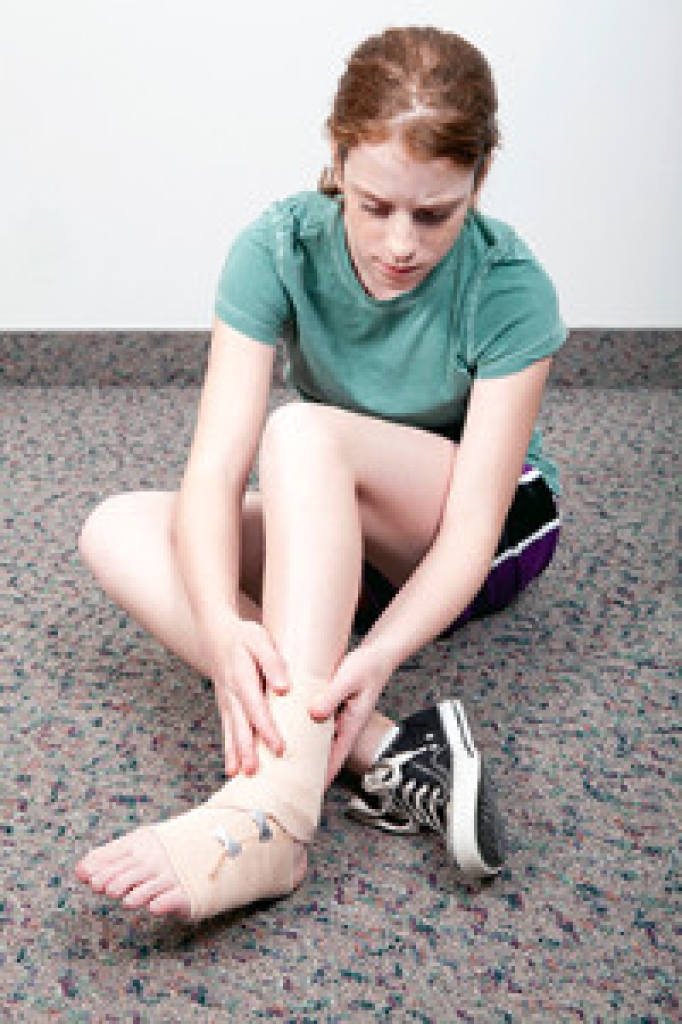
Read more about How to Prevent Running Injuries

It's Time for Beautiful Feet

You don't need an excuse to have beautiful nails. Step outside without worrying about the appearance of your feet.

How to Pick New Running Shoes

Choosing the right running shoes for you can mean the difference between comfort and potential injury. Not all running shoes are built the same. They vary not just in foot size and style but also in the surfaces they were designed for. If you run on trails, a trail running shoe is a better choice than a running shoe designed for roads or the track. The shoe should have enough space so your feet aren’t cramped but should still be snug. Knowing whether your foot rolls in too much (overpronation), rolls out too much (underpronation), or stays where it is (neutral) when you step can also determine what shoe is right for you. However it is advised to not worry too much about foot roll. The most important part is comfort. You should be able to wear the shoes for long periods without feeling pain or discomfort.

If you are a runner, wearing the right running shoe is essential. For more information, contact one of our podiatrists from Pennsylvania Foot & Ankle. Our doctors can provide the care you need to keep you pain-free and on your feet.

Choosing the Right Running Shoe for Your Foot Type

To increase performance and avoid the risk of injury, it is important to choose the right running shoe based on your foot type. The general design of running shoes revolves around pronation, which is how the ankle rolls from outside to inside when the foot strikes the ground.

  • Neutral runners are able to choose from a wide variety of shoes, including minimalist shoes or even going barefoot.
  • Runners who overpronate, or experience an over-abundance of ankle rolling, should choose shoes that provide extra motion control and stability.
  • Runners who underpronate, or supinate, have feet that have high arches and lack flexibility, preventing shock absorption. They require shoes with more flexibility and cushion.

If you have any questions, please feel free to contact one of our offices located in Bensalem, Philadelphia, Northeast Philadelphia, Yardley, PA, and Hamilton, NJ . We offer the newest diagnostic and treatment technologies for all your foot care needs.

Read more about Choosing the Right Running Shoe for Your Foot Type

Taking Care of Minor Foot Wounds In Diabetics

A major problem among those who suffer from diabetes is poor blood circulation and nerve damage. This can lead to diabetics developing foot ulcers that don’t heal properly or quickly. In more severe cases in which the wound has become infected, this can lead to amputation. The first step is to keep the diabetes in check by observing blood glucose levels and staying healthy. Inspecting the foot daily is important because nerve damage can prevent a diabetic from realizing they have an ulcer. Foot inspections can help diabetics discover a wound early so they can alert a podiatrist. If there is a wound, diabetics should wash the wound with saline or clean water. Applying an antibiotic ointment and covering with a bandage is also important. However these solutions are only temporary, and you should see a podiatrist if you have a foot ulcer.

Diabetic foot care is important in preventing foot ailments such as ulcers. If you are suffering from diabetes or have any other concerns about your feet, contact one of our podiatrists from Pennsylvania Foot & Ankle. Our doctors can provide the care you need to keep you pain-free and on your feet.

Diabetic Foot Care

Diabetes affects millions of people every year. The condition can damage blood vessels in many parts of the body, especially the feet. Because of this, taking care of your feet is essential if you have diabetes, and having a podiatrist help monitor your foot health is highly recommended.

The Importance of Caring for Your Feet

  • Routinely inspect your feet for bruises or sores.
  • Wear socks that fit your feet comfortably.
  • Wear comfortable shoes that provide adequate support.

Patients with diabetes should have their doctor monitor their blood levels, as blood sugar levels play such a huge role in diabetic care. Monitoring these levels on a regular basis is highly advised.

It is always best to inform your healthcare professional of any concerns you may have regarding your feet, especially for diabetic patients. Early treatment and routine foot examinations are keys to maintaining proper health, especially because severe complications can arise if proper treatment is not applied.

If you have any questions, please feel free to contact one of our offices located in Bensalem, Philadelphia, Northeast Philadelphia, Yardley, PA, and Hamilton, NJ . We offer the newest diagnostic and treatment technologies for all your foot care needs.
Read more about How to Care for Diabetic Foot

How to Prevent Stress Fractures

Stress fractures are small cracks in the bone typically caused by repetitive force or stress. While they can occur in various areas of the body, stress fractures are more likely to occur in the foot due to it having to bear weight and having to sustain repeated strikes. They can be very painful and often take time to properly heal. To avoid dealing with stress fractures, practice methods to prevent them from occurring. If you are starting a new physical activity, prevent stress fractures by taking it slowly and gradually increasing intensity and duration. This prevents overuse and allows your body to acclimate to physical stress. Footwear that provides proper support can improve your running style and prevent stress fractures. The surfaces you run on can also affect your risk for injury. Soft surfaces like grass can be more forgiving than harder surfaces like concrete. If you have questions about stress fractures and whether running is right for you, ask a podiatrist.

Activities where too much pressure is put on the feet can cause stress fractures. To learn more, contact one of our podiatrists from Pennsylvania Foot & Ankle. Our doctors can provide the care you need to keep your pain free and on your feet.

Dealing with Stress Fractures of the Foot and Ankle

Stress fractures occur in the foot and ankle when muscles in these areas weaken from too much or too little use.  The feet and ankles then lose support when walking or running from the impact of the ground. Since there is no protection, the bones receive the full impact of each step. Stress on the feet can cause cracks to form in the bones, thus creating stress fractures.

What Are Stress Fractures?

Stress fractures occur frequently in individuals whose daily activities cause great impact on the feet and ankles. Stress factors are most common among:

  • Runners                                
  • People affected with Osteoporosis
  • Tennis or basketball players
  • Gymnasts
  • High impact workouts

Symptoms

Pain from the fractures occur in the area of the fractures and can be constant or intermittent. It will often cause sharp or dull pain with swelling and tenderness. Engaging in any kind of activity which involves high impact will aggravate pain.

If you have any questions please contact one of our offices located in Bensalem, Philadelphia, Northeast Philadelphia, Yardley, PA, and Hamilton, NJ . We offer the newest diagnostic and treatment technologies for all your foot and ankle needs.

Read more about Dealing with Stress Fractures of the Foot and Ankle

Heel Pain Can Be Treated!

Do you suffer from heel pain when you get up in the morning? If so, you should seek professional help and have a proper diagnosis performed. Heel pain can be caused by several different foot-related conditions.

Connect With Us