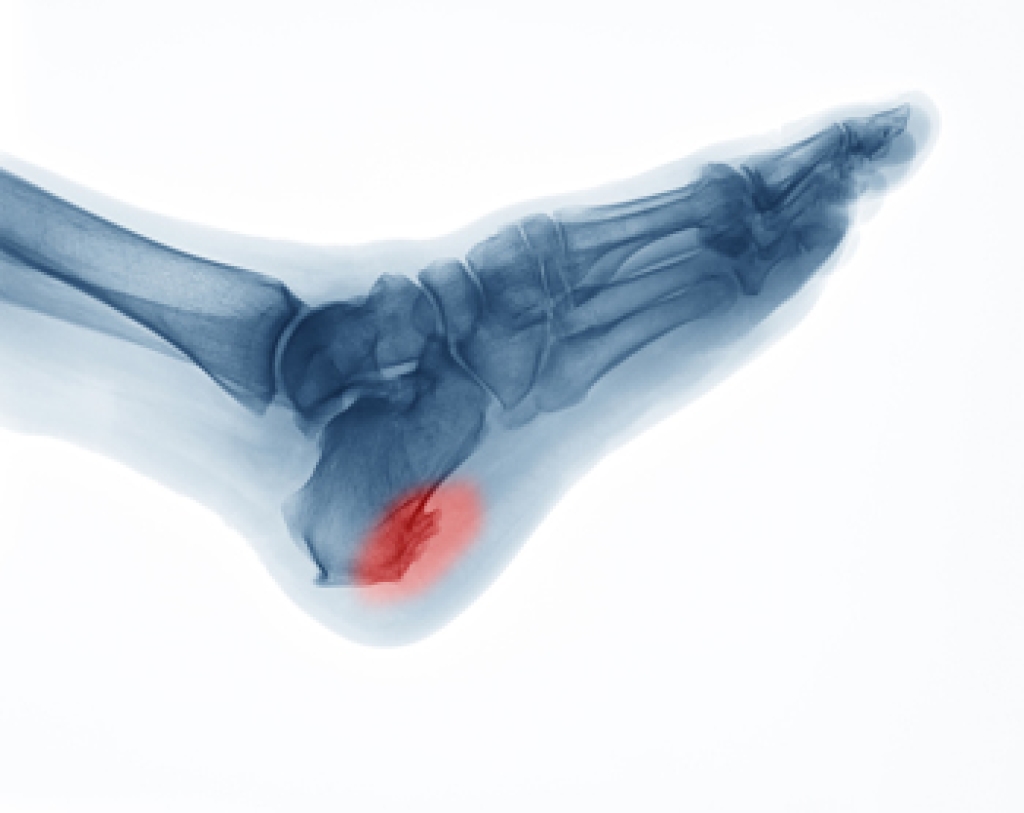
What Causes Heel Spurs?

Heel spurs are pointy calcium deposits on the heel bone that develop after there is repeated inflammation at the site where ligaments or tendons attach to it. You might be asking what causes this inflammation? Strain injuries due to athletics, chronic inflammatory disorders, and arthritis that affects tendons and ligaments all can play a factor in the development of heel spurs. Heel spurs can be associated with other conditions as well. For instance, spurs on the back of the heel bone may be associated with Achilles tendonitis, and spurs on the bottom of the heel bone may be associated with plantar fasciitis. While heel spurs don’t always cause symptoms, in some cases they have been known to create tenderness and pain where the Achilles tendon attaches to the back of the heel bone, or where the plantar fascia attaches to the bottom of the heel bone. By using x-rays and other diagnostics, a podiatrist can identify the bony outgrowth and heal the underlying condition with a variety of treatments and custom orthotics.

Heel spurs can be incredibly painful and sometimes may make you unable to participate in physical activities. To get medical care for your heel spurs, contact one of our podiatrists from Pennsylvania Foot & Ankle. Our doctors will do everything possible to treat your condition.

Heels Spurs

Heel spurs are formed by calcium deposits on the back of the foot where the heel is. This can also be caused by small fragments of bone breaking off one section of the foot, attaching onto the back of the foot. Heel spurs can also be bone growth on the back of the foot and may grow in the direction of the arch of the foot.

Older individuals usually suffer from heel spurs and pain sometimes intensifies with age. One of the main condition's spurs are related to is plantar fasciitis.

Pain

The pain associated with spurs is often because of weight placed on the feet. When someone is walking, their entire weight is concentrated on the feet. Bone spurs then have the tendency to affect other bones and tissues around the foot. As the pain continues, the feet will become tender and sensitive over time.

Treatments

There are many ways to treat heel spurs. If one is suffering from heel spurs in conjunction with pain, there are several methods for healing. Medication, surgery, and herbal care are some options.

If you have any questions, please feel free to contact one of our offices located in Bensalem, Philadelphia, Northeast Philadelphia, Yardley, PA, and Hamilton, NJ . We offer the newest diagnostic and treatment technologies for all your foot care needs.


Read more about Heel Spurs

What Is Os Trigonum Syndrome?

An unfused Os trigonum is a small, extra bone that very few people experience at the back of the ankle, just behind the ankle joint. Having an unfused Os trigonum typically doesn’t cause any problems, however, when an ankle injury occurs, Os trigonum syndrome can develop. This condition is often caused by repetitive overuse and trauma and is particularly common among ballet dancers, runners, and football players who have an unfused Os trigonum. Symptoms of this condition can include pain at the back of the ankle, swelling, tenderness, and a small, hard lump near the Achilles tendon. Conservative treatments are frequently effective in treating os trigonum syndrome and may include resting, icing, and immobilizing the foot, taking anti-inflammatory medications, and doing strengthening and stretching exercises. To learn more about this condition, please consult with a podiatrist. 

Ankle pain can be caused by a number of problems and may be potentially serious. If you have ankle pain, consult with one of our podiatrists from Pennsylvania Foot & Ankle. Our doctors will assess your condition and provide you with quality foot and ankle treatment.

Ankle pain is any condition that causes pain in the ankle. Due to the fact that the ankle consists of tendons, muscles, bones, and ligaments, ankle pain can come from a number of different conditions.

Causes

The most common causes of ankle pain include:

  • Types of arthritis (rheumatoid, osteoarthritis, and gout)
  • Ankle sprains
  • Broken ankles
  • Achilles tendonitis
  • Achilles tendon rupture
  • Stress fractures
  • Bursitis
  • Tarsal tunnel syndrome
  • Plantar fasciitis

Symptoms

Symptoms of ankle injury vary based upon the condition. Pain may include general pain and discomfort, swelling, aching, redness, bruising, burning or stabbing sensations, and/or loss of sensation.

Diagnosis

Due to the wide variety of potential causes of ankle pain, podiatrists will utilize a number of different methods to properly diagnose ankle pain. This can include asking for personal and family medical histories and of any recent injuries. Further diagnosis may include sensation tests, a physical examination, and potentially x-rays or other imaging tests.

Treatment

Just as the range of causes varies widely, so do treatments. Some more common treatments are rest, ice packs, keeping pressure off the foot, orthotics and braces, medication for inflammation and pain, and surgery.

If you have any questions please feel free to contact one of our offices located in Bensalem, Philadelphia, Northeast Philadelphia, Yardley, PA, and Hamilton, NJ . We offer the newest diagnostic tools and technology to treat your foot and ankle needs.

Read more about Ankle Pain

Heel Pain Can Be Treated!

Do you suffer from heel pain when you get up in the morning? If so, you should seek professional help and have a proper diagnosis performed. Heel pain can be caused by several different foot-related conditions.

Help Your Child Step Into a Lifetime of Healthy Nails

Ingrown toenails can occur when toenails are too short and/or when footwear is too tight. Because children are still learning proper foot hygiene and their feet are growing so rapidly, they are quite susceptible to ingrown toenails. You can help them avoid this painful condition with a little guidance and supervision. Show them how to properly trim their toenails so that they can begin taking care of their own. After a shower or bath when their nails are softer, demonstrate how to properly trim toenails: straight across, and not rounded or too short. The corners of toenails should still be visible after trimming. Explain how these techniques allow nails to grow on top of the skin at the edges, rather than into it. Also, be sure to check frequently to make sure their shoes fit properly—both in length and width. Encourage them to get involved in their own foot health by being aware of when their shoes start feeling tight, and helping look for shoe styles with wider toe boxes when shoe shopping. If your child does develop an ingrown toenail, make an appointment with a podiatrist for proper treatment and to avoid an infection from possibly setting in.


Ingrown toenails may initially present themselves as a minor discomfort, but they may progress into an infection in the skin without proper treatment. For more information about ingrown toenails, contact one of our podiatrists of Pennsylvania Foot & Ankle. Our doctors can provide the care you need to keep you pain-free and on your feet.

Ingrown Toenails

Ingrown toenails are caused when the corner or side of a toenail grows into the soft flesh surrounding it. They often result in redness, swelling, pain, and in some cases, infection. This condition typically affects the big toe and may recur if it is not treated properly.

Causes

  • Improper toenail trimming
  • Genetics
  • Improper shoe fitting
  • Injury from pedicures or nail picking
  • Abnormal gait
  • Poor hygiene

You are more likely to develop an ingrown toenail if you are obese, have diabetes, arthritis, or have any fungal infection in your nails. Additionally, people who have foot or toe deformities are at a higher risk of developing an ingrown toenail.

Symptoms

Some symptoms of ingrown toenails are redness, swelling, and pain. In rare cases, there may be a yellowish drainage coming from the nail.

Treatment

Ignoring an ingrown toenail can have serious complications. Infections of the nail border can progress to a deeper soft-tissue infection, which can then turn into a bone infection. You should always speak with your podiatrist if you suspect you have an ingrown toenail, especially if you have diabetes or poor circulation.

If you have any questions, please feel free to contact one of our offices located in Bensalem, Philadelphia, Northeast Philadelphia, Yardley, PA, and Hamilton, NJ . We offer the newest diagnostic and treatment technologies for all your foot care needs.

Read more about Ingrown Toenails

The Education of a Podiatrist

The area of the body that podiatrists treat are the feet, and sometimes the ankle too. They are specialists that are qualified in correcting disorders of the feet, and are defined as foot specialists. Some podiatrists may choose to practice a specific form of podiatry, including sports medicine, pediatrics, or diabetic foot care. Mandatory education consists of obtaining a bachelor's degree, followed by completing a four year program in a podiatric medical school. Additionally, there are many states that require completing a two year residency program as this can provide hands on experience with various medical and surgery practices. If you are considering a career in podiatry, it is suggested that you consult with a podiatrist who can enlighten you on the daily procedures of podiatry.

If you are dealing with pain in your feet and ankles, you may want to seek help from a podiatrist. Feel free to contact one of our podiatrists from Pennsylvania Foot & Ankle. Our doctors can provide the care you need to keep you pain-free and on your feet.

What Is a Podiatrist?

A podiatrist is a doctor of podiatric medicine who diagnoses and treats conditions of the foot, ankle, and related structures of the leg. Your podiatrist may specialize in a certain field such as sports medicine, wound care, pediatrics, and diabetic care. Podiatrists have the ability to become board certified through training, clinical experience, and then taking an exam.

What Do Podiatrists Do?

On a daily basis, a podiatrist may perform the following activities:

  • Diagnose foot ailments such as ulcers, tumors, fractures, etc.
  • Use innovative methods to treat conditions
  • Use corrective orthotics, casts, and strappings to correct deformities
  • Correct walking patterns and balance
  • Provide individual consultations to patients

It is very important that you take care of your feet. It’s easy to take having healthy feet for granted, however foot problems tend to be among the most common health conditions. Podiatrists can help diagnose and treat a variety of feet related conditions, so it is crucial that you visit one if you need assistance.

If you have any questions, please feel free to contact one of our offices located in Bensalem, Philadelphia, Northeast Philadelphia, Yardley, PA, and Hamilton, NJ . We offer the newest diagnostic and treatment technologies for all your foot care needs.

Read more about What is a Podiatrist?

Connect With Us